


Most goals don’t fizzle out and fail by February because you’re lazy. They fail because “goal setting” is not a system. This post gives you a simple system you can run every week:
-
Translate a goal into clear outcomes
-
Break it into small, finishable tasks (SMART)
-
Run a weekly execution loop (plan → do → review)
-
Add a Financial Boss twist: goals cost money, so track Budget vs Actual Tool
Note: I’ll mention how this looks in planning software sometimes, but this system is tool‑agnostic. You can run it in Notion, Trello, Asana, Jira, a spreadsheet, or a notebook. The process is the point.
Before you execute: make sure the goal is worth executing
Here’s the uncomfortable truth: you can build an incredible system… and still end up executing the wrong goals.
That’s why I like life planning frameworks like George Kinder’s work. Not because they’re “woo,” but because they force clarity.
In plain English, the questions are basically:
-
If you had enough money, what would you actually do with your life?
-
If you had only a few healthy years left, what would you change right now?
-
If this were your last day on earth, what would you regret not doing?
You don’t need a perfect answer. You just need direction. Because execution is powerful and you want it pointed at the right target.
You can also take the Wheel of Life Assessment to hone-in on which goals you might want to set for yourself.
Why goals die (even good ones)
If you only set goals once in January, you’re basically saying: “I hope Future Me feels like doing this later.”
Well, "Future You" is busy. Busy people don’t need more motivation. They need a process that still works on random Tuesdays.
And there’s a second reason goals die that no one likes to admit: goals have hidden costs. Time costs. Energy costs. And often… money costs. If you don’t plan those costs, the goal eventually collides with real life.
One of my 2026 goals is to start my first bee colony. It sounds quirky, but it’s the perfect example because it has:
-
a seasonal deadline
-
a bunch of dependencies (equipment, training, a local club)
-
a real budget
The Best System for Executing Your Goals
A good system is boring. That’s a compliment. It has three parts:
-
Define “done”
-
Turn “done” into work
-
Run the work weekly until it’s finished
Let’s walk through it in a way you can copy‑paste into your life.
Step 1: Define “done” (so your goal stops being vibes)
Start with one sentence that forces clarity.
USER STORY TEMPLATE:
As a [type of person], I want [a specific outcome], so that [the benefit].
Example (my beekeeping goal):
As a new beekeeper, I want to set up my first hive and start a colony in 2026, so I can build a fun hobby that also supports the local ecosystem.
That single sentence protects you from scope creep. It keeps you from turning “start beekeeping” into a never‑ending research project.
Quick self‑check:
-
Would I know when this is complete?
-
Would another person understand what “done” looks like?
If not, tighten the sentence until you can answer “yes.”
Step 2: Turn the goal into a simple hierarchy (so you don’t lose the plot)
Here’s the structure I use because it mirrors how real projects get finished:
THEME → CATEGORY → GOAL → TASKS
I change the langauge slightly when I adapt this system to Jira:
EPIC → FEATURE → USER STORY → TASKS
If you watched my first video or read the blog post, you’ll recognize the themes as Wheel of Life categories. That’s intentional: your goals should live inside the life you actually want. This reinforces alignment.
Example:
Theme: Fun & Recreation
Category: Hobbies
Goal: Start a beekeeping hobby in 2026
Tasks: the work required to make it real
This part matters because it prevents a common failure mode: people build a task list that has no connection to priorities. Then they “get stuff done”… but still feel unfulfilled.
Step 3: Make tasks SMART (Specific, Measurable, Achievable, Relevant, Time-bound)
SMART is not just for goals. It’s even more useful for tasks. When a task is SMART, you can finish it in one sitting (or a few).
When it’s not SMART, it becomes a vague blob you avoid.
Here’s what “SMART tasks” look like:
SPECIFIC: Exactly what action will I take?
MEASURABLE: What proof shows it’s complete? (receipt, screenshot, checkbox, calendar event)
ACHIEVABLE: Is this realistic with my time, energy, and constraints?
RELEVANT: Does this actually move the goal forward (or is it procrastination disguised as planning)?
TIME-BOUND: What date does this need to be done by?
Beekeeping example tasks (finishable, not fuzzy):
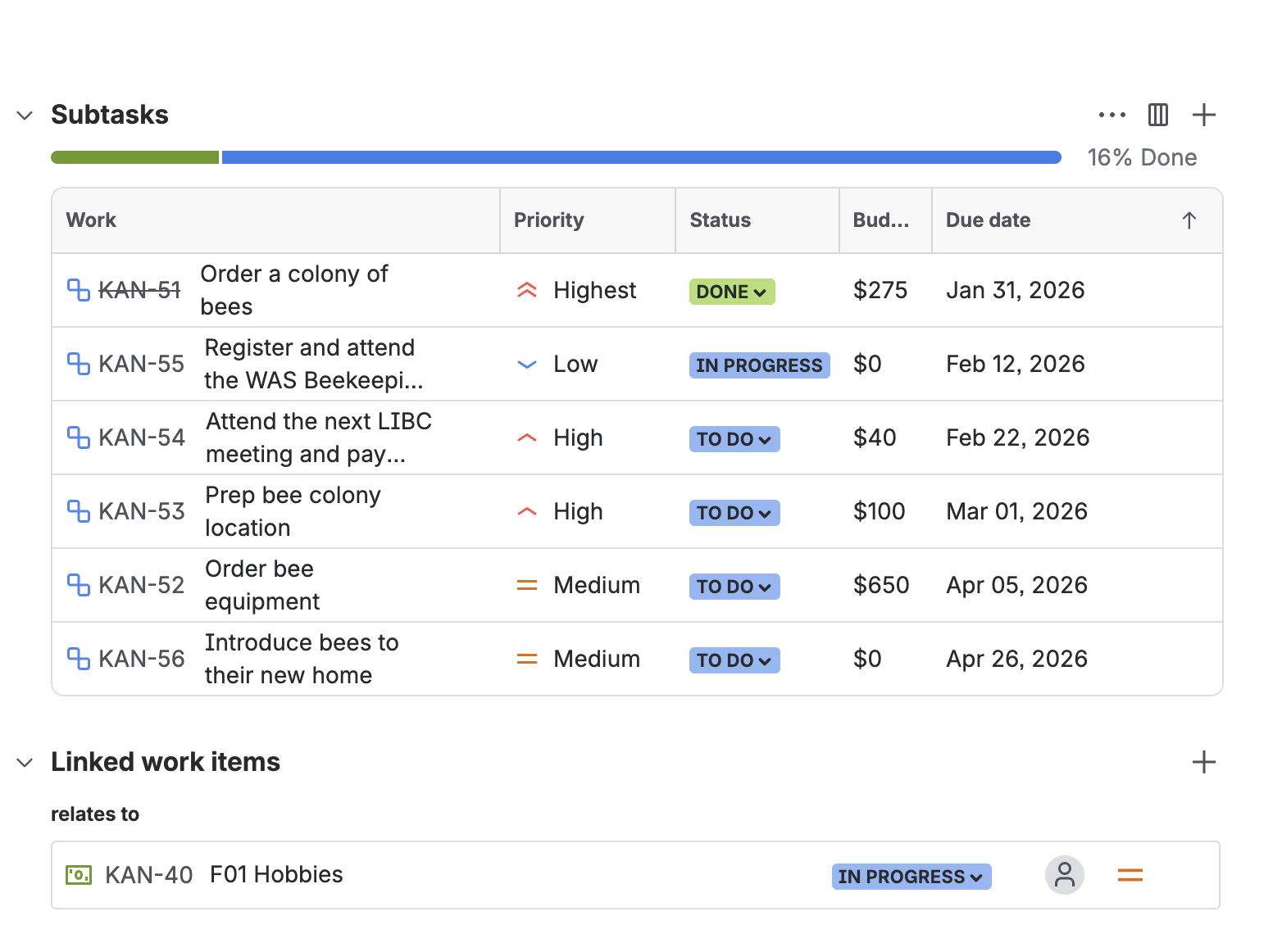
Notice what’s happening: we’re turning “I want to be a beekeeper” into actions that can actually happen.
Step 4: Run the weekly execution loop (the secret sauce)
This is where most people stop too early. They set goals, maybe even break them into tasks… and then nothing moves.
So, here’s the loop:
WEEKLY PLAN (10 minutes)
-
Pick 1–3 tasks for the week
-
Confirm deadlines and dependencies
-
Decide what “good enough” looks like this week
DO THE WORK
-
If a task takes under 2-minutes, do it now
-
If it’s blocked, write down what it’s blocked by
-
If it’s too big, break it into smaller tasks
WEEKLY REVIEW (10 minutes)
-
What moved?
-
What didn’t?
-
What’s blocked?
What will I change next week?
This isn’t motivational. It’s mechanical. That’s why it works.
If you’ve played The Legend of Zelda: Breath of the Wild, you know the feeling: you don’t “beat the game” by thinking about the final boss. You progress by finishing small quests, collecting what you need, and showing up consistently. Your goal system works the same way.
Opportunity cost (the part that makes this real)
Execution is not just “doing more.” It’s choosing what you will NOT do.
Here’s a real example: Let’s say it’s a weeknight and you have two options:
-
Go to a New York Knicks game
-
Go to a LIBC meeting (Long Island Beekeepers Club) because you said beekeeping matters to you this year
Both are fine choices. But they are not the same choice.
The point of a system is that it makes tradeoffs visible. It turns “I want this goal” into “I’ll trade for this goal.”
The Financial Boss twist: Budget vs Actual (goals cost money)
Most goal systems ignore money. That’s a mistake.
A lot of goals quietly require spending: courses, equipment, travel, memberships, childcare, software, coaching, etc.
So, I recommend adding two simple fields to your tasks:
-
BUDGET: what you think it will cost
-
ACTUAL COST: what it actually cost
Why this helps:
-
You stop getting surprised
-
You can prioritize goals based on real tradeoffs
-
You can align your spending with what you say matters
At the end of the year, this is powerful: you can look back and see what your goals cost, what they gave you, and whether the tradeoff was worth it.
A quick “start here” checklist (do this today)
-
Write one user story for your #1 goal
-
Create 3–6 tasks that move it forward
-
Make each task SMART (especially the due date)
-
Pick 1–3 tasks for this week
-
Add a rough Budget number to each task that costs money
Then run the loop for two weeks before you optimize anything. The goal is execution, not a perfect setup.
What’s next: cash flow (where the money comes from)
Once you start executing goals, one question shows up fast: “Okay… where’s the money coming from?” That’s the bridge to cash flow.
In the next post/video, we’ll connect your goal system to a simple cash flow plan so you can fund the life you’re building.
Quick note: This is educational content, not personalized financial or tax advice. If you want help building a plan that fits your specific situation, reach out.
Share this

A 3-Step Framework to Set (and Actually Hit) Your 2026 Goals

Why Your Budget Doesn't Work, Even If You Make Good Money

No Comments Yet
Let us know what you think